Table of Contents
Introduction
As a packaging solutions manufacturer with 28 years of experience, we have observed that many food enterprises often concentrate their efforts on recipe development when launching new products, while overlooking the packaging aspect. This frequently leads to issues, particularly for high-fat, easily oxidised products such as crisps and chips.
Poor sealing performance in vacuum packaging bags not only causes products to soften but also triggers rancidity and off-flavours. Today, I shall share key metrics to consider when selecting premium vacuum packaging bags for crisps.
Are aluminum foil and metallized layers standard features?
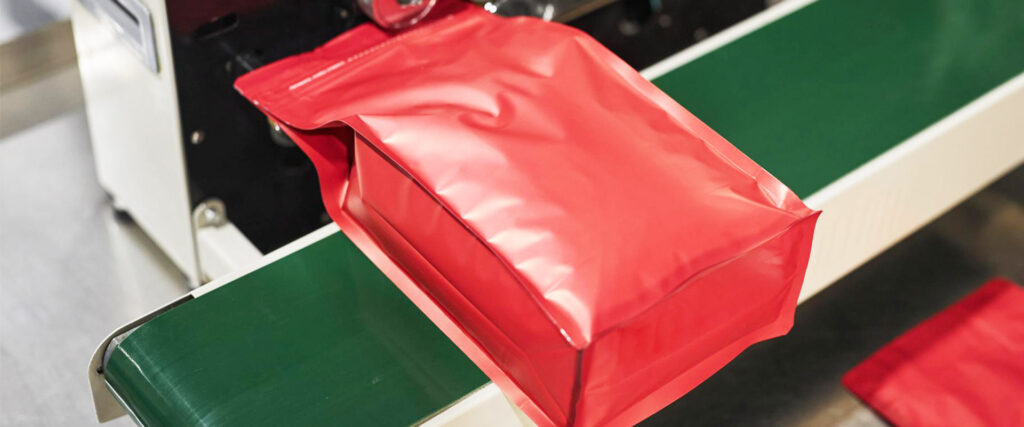
Aluminum foil packaging bags are widely used in food and daily chemical product packaging due to their lightweight nature, excellent sealing properties, and superior wrapping performance.
What Constitutes an Aluminium Foil Packaging Bag?
Aluminium foil packaging bags are manufactured through specialised composite processes that bond aluminium with other high-barrier materials. Beyond inheriting aluminium’s inherent metallic lustre, superior barrier properties, sealing integrity, heat resistance, and moisture protection, these bags also offer light-blocking capabilities, enhanced barrier performance, and anti-static properties.
What Is a Metallized Packaging Pouch?
A metallised packaging pouch is manufactured by uniformly coating high-purity aluminium onto plastic film under high-temperature vacuum conditions. However, its fundamental composition remains plastic film. Thus, the distinction between metallised pouches and aluminium foil pouches lies in the fact that aluminium foil is produced by pressing aluminium sheets.
The core function of crisp packaging lies in its airtight barrier properties. To prevent oxidation of fats and oils due to light exposure and oxygen, our company employs a multi-layer composite structure to ensure product safety.
What Constitutes a Multi-Layer Composite Structure?
Outer layer: Utilizes high-definition BOPP or PET film to ensure vibrant and vivid printed graphics.
- Biaxially Oriented Polypropylene (BOPP) film offers high transparency, strength, and durability, making it widely used in packaging and printing applications.
- Polyethylene terephthalate (PET) film is a packaging film with outstanding comprehensive properties, combining exceptional transparency, gloss, airtightness, and aroma retention. Its mechanical properties are particularly remarkable: its toughness ranks among the highest for thermoplastics, with tensile strength and impact resistance far exceeding ordinary films.
Intermediate layer (core material): Must possess high barrier properties. Metallized film (VMPET) or pure aluminum foil (AL) serves as the barrier layer, completely blocking moisture and oxygen permeation to extend product shelf life.
Metallized film is a flexible laminate with an aluminum layer deposited via vacuum coating. Its high reflectivity, superior barrier properties, lightweight nature, and adequate mechanical strength make it widely used in food packaging, insulation materials, and other applications.
Seal Strength and Vacuum Stability
On production lines, the heat-sealing process is equally critical. Many food packaging pouches leak during transportation primarily due to uneven heating of the inner layer material. Our selected food-grade PE material possesses an exceptionally wide heat-sealing temperature range, ensuring a tight seal even when minor grease contamination is present at the sealing point. This achieves outstanding vacuum packaging performance.
Details Determine Repurchase Rates
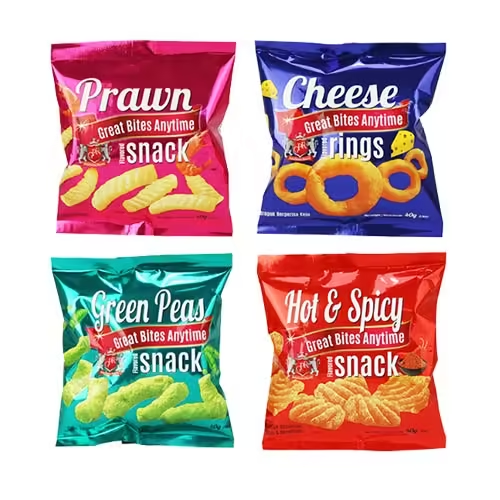
Beyond providing airtight protection for foodstuffs, the user experience delivered by packaging is equally vital. Consequently, our design prioritises the following details:
- Easy-tear Design: Laser-cut tear lines or precision serrated edges enable consumers to effortlessly open packaging with one hand.The easy-tear design of packaging bags has become a crucial detail in enhancing user experience. A well-crafted tear-open feature not only enables consumers to swiftly open the packaging but also maintains its integrity during transportation and storage.
- Puncture resistance: For products with sharp edges such as crisps and fruit/vegetable crisps, we reinforce the toughness of the composite layer to prevent bag damage during vacuum sealing or logistics compression.
Conclusion
As a supplier specialising in flexible packaging and blow/injection moulding, we understand packaging transcends mere containment – it embodies brand identity.Our vacuum packaging bags are engineered to deliver on that promise.
Should you encounter issues such as packaging leakage or printing colour discrepancies, or seek bespoke eco-friendly packaging solutions, we welcome your enquiry at any time. Complimentary sample pouches are available for your consideration.
FAQ
Why must vacuum packaging bags possess high barrier properties?
Crisps are high-fat foods prone to spoilage or off-flavours caused by oxidation from light and oxygen exposure. High-barrier packaging (such as aluminium foil or metallised film) effectively blocks light, moisture and oxygen, thereby preserving crispness and extending shelf life.
What distinguishes metallised pouches from pure aluminium foil pouches?
Pure aluminium foil pouches form a solid metal layer by pressing aluminium sheets; metallised pouches deposit high-purity aluminium onto plastic film surfaces via high-temperature vacuum vapour deposition, retaining a plastic substrate. Both offer high barrier properties, though pure aluminium foil bags typically provide superior barrier performance, while metallised bags offer greater flexibility.
What are the advantages of using multi-layer composite structures for vacuum packaging bags?
Multi-layer composite structures typically comprise an outer layer (such as BOPP or PET, used for printing and maintaining rigidity) and an intermediate high-barrier layer (such as pure aluminium foil or metallised film). This construction not only enables vibrant printed colours but also provides complete barrier protection against oxygen and moisture permeation, ensuring crisps retain their crisp texture throughout their shelf life.
How can one prevent vacuum packaging bags from leaking air during transportation?
The key lies in seal strength and material selection. Premium packaging bags utilise food-grade PE inner lining material with a broad heat-sealing temperature range. Even with trace amounts of oil present at the seal, it maintains a robust seal, ensuring stable vacuum conditions and preventing damage or air leakage during transit.
What factors are considered in the tear-open design for vacuum packaging bags?
The tear-open design aims to enhance user experience. By incorporating laser-cut lines or serrated edges, it ensures the packaging remains intact during transport and stacking whilst allowing consumers to open it cleanly and effortlessly with one hand when consuming the product.