Оглавление
Введение
In modern packaging, small design details often decide whether a product feels convenient, premium, or frustrating to use. One of the most widely adopted closures in liquid packaging today is the bottle flip top cap. It may look simple, but it plays a critical role in product usability, hygiene control, and brand perception.
If you are working with personal care, household cleaning, or cosmetic products, you’ve likely seen how flip top caps influence customer satisfaction. According to a Packaging Digest industry overview, packaging convenience features such as controlled dispensing closures significantly increase user satisfaction and repeat purchase intent, especially in daily-use products.
This guide will help you understand what a bottle flip top cap is, how it works, where it is used, and how to choose the right type for your packaging needs.
Что такое Bottle Flip Top Cap?
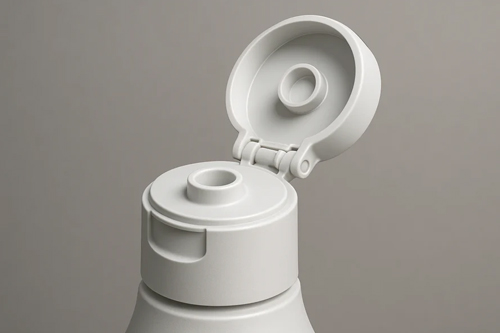
A bottle flip top cap is a type of closure designed with a hinged lid that opens and closes easily with one finger. It is typically mounted on bottles containing liquids such as shampoos, lotions, soaps, or cleaning solutions.
Structurally, it consists of three main parts:
- The cap base, which attaches to the bottle neck
- The hinge mechanism, allowing repeated opening and closing
- The dispensing orifice, which controls liquid flow
When you press one side of the cap, the lid flips open, allowing controlled dispensing. After use, it snaps back into a closed position, helping maintain product freshness and reduce contamination.
Compared to screw caps, flip top caps are significantly more user-friendly, especially in one-hand usage scenarios such as showers or kitchens.
Key Benefits of Bottle Flip Top Cap
The popularity of bottle flip top caps is driven by both functional and commercial advantages.
First, they improve user convenience. Customers can operate them with one hand, which is particularly useful for personal care routines.
Second, they reduce product waste. Controlled openings help regulate how much liquid is dispensed each time.
Third, they enhance hygiene. Since the opening is quickly sealed after use, exposure to air and contaminants is minimized.
Fourth, they support brand perception. A smooth, reliable cap creates a sense of quality and attention to detail.
From an industry perspective, controlled dispensing packaging has been associated with up to 25–30% reduction in product overuse in daily-use liquid categories, according to general packaging usability studies referenced in FMCG packaging reports.
Why Brands Prefer Flip Top Caps
For brands, packaging is not just functional—it is part of the product experience.
You may notice that many leading personal care and cleaning brands rely on flip top caps because they:
- Improve ease of use during repetitive daily application
- Reduce customer frustration caused by spills or over-dispensing
- Provide a consistent tactile brand experience
- Lower packaging complexity compared to pump systems
In short, they strike a balance between cost efficiency and user experience.
Materials Used in Bottle Flip Top Caps
Most bottle flip top caps are made from thermoplastic materials designed for durability and flexibility.
Common materials include:
- PP (Polypropylene): The most widely used due to its balance of strength and flexibility
- PE (Polyethylene): Offers softness and good sealing properties
- Recyclable mono-material plastics: Increasingly used for sustainability compliance
Material Performance Overview
| Материал | Прочность | Гибкость | Эффективность затрат | Химическая стойкость |
|---|---|---|---|---|
| ПП | Высокий | Середина | Высокий | Высокий |
| ЧП | Середина | Высокий | Середина | Середина |
| Recycled Mono-material | Середина | Середина | Середина | Medium–High |
This table shows why PP remains the dominant choice for most flip top cap applications, especially in high-volume production.
Types of Bottle Flip Top Caps
Not all flip top caps are the same. Different designs serve different product needs.
- Standard flip top caps: Suitable for most general liquid products
- Wide opening caps: Designed for thicker liquids like gels or conditioners
- Precision flow caps: Used when controlled dispensing is required
- Leak-resistant upgraded caps: Designed for travel or export packaging
Выбор правильного типа
When selecting a cap, you should consider:
- Product viscosity (thin vs thick liquids)
- Usage environment (home, travel, retail)
- Bottle compatibility
- Brand positioning
A mismatch between cap type and product texture is one of the most common packaging issues in liquid products.
Приложения в разных отраслях
Bottle flip top caps are widely used across multiple industries because of their versatility.
In personal care, they are used for shampoo, body wash, and lotions. In household cleaning, they are ideal for dishwashing liquids and surface cleaners. In cosmetic packaging, they help maintain product hygiene and controlled application. They are also used in travel-size products due to their compact and secure design.
Case Insight
A mid-sized personal care brand transitioned from screw caps to flip top caps for its shampoo line. After the switch, internal customer feedback analysis showed a noticeable improvement in usability ratings, particularly among users who preferred one-hand operation in shower environments. The brand also reported fewer complaints related to product spillage.
This demonstrates how a small packaging change can significantly influence user perception.
Bottle Flip Top Cap vs Other Cap Types
To understand the advantages more clearly, here is a comparison:
| Особенность | Flip Top Cap | Винтовой Крышкой | Pump Cap | Spray Cap |
|---|---|---|---|---|
| Простота использования | Высокий | Середина | Высокий | Высокий |
| Расходы | Низкий | Низкий | Высокий | Середина |
| Сопротивление утечке | Высокий | Середина | Высокий | Середина |
| Dosage Control | Середина | Низкий | Высокий | Середина |
| Ideal Use | Liquids | General storage | Lotions | Sprays |
Flip top caps offer a strong balance between affordability and usability, making them one of the most practical packaging choices for liquid products.
Customization Options for Bottle Flip Top Caps
Customization plays a major role in modern packaging design.
You can customize:
- Color matching to brand identity
- Neck size compatibility (common sizes like 18mm, 20mm, 24mm, 28mm)
- Logo embossing or printing
- Surface finishes (matte, glossy, soft-touch)
Branding Value
Packaging research from multiple FMCG studies shows that visual packaging consistency can significantly influence first-time purchase decisions. A well-designed flip top cap contributes to a cohesive brand identity, especially when combined with matching bottle design.
How to Choose the Right Bottle Flip Top Cap
When selecting a flip top cap, you should evaluate both functional and branding factors.
Key considerations include:
- Product viscosity and flow behavior
- Required sealing performance
- Manufacturing compatibility with bottle neck
- Target market expectations
- Cost vs performance balance
Распространенные ошибки, которых следует избегать
- Choosing incorrect neck size compatibility
- Ignoring leakage testing under real transport conditions
- Overlooking user experience in repeated usage scenarios
- Prioritizing cost over functional reliability
Avoiding these mistakes helps ensure better product performance and fewer post-launch issues.
Sustainability Trends in Flip Top Cap Packaging
Sustainability is becoming a key driver in packaging decisions.
Manufacturers are increasingly adopting:
- Recyclable mono-material caps
- Lightweight designs to reduce plastic usage
- Reusable packaging systems
According to a McKinsey packaging sustainability report, more than 60% of consumers now consider environmental impact when evaluating everyday products. This is pushing brands to redesign closures like flip top caps with recyclable and reduced-material structures.
Future Trends in Bottle Flip Top Cap Design
The future of flip top caps is moving toward smarter, more efficient, and more sustainable designs.
Key trends include:
- Improved leak-proof engineering for travel use
- Integration with refillable packaging systems
- Increased use of recycled plastics
- Minimalist and lightweight structural designs
As packaging continues to evolve, flip top caps will remain a core component in liquid product packaging due to their simplicity and reliability.
Заключение
The bottle flip top cap may seem like a small component, but it has a major impact on product usability, brand perception, and packaging efficiency. From personal care to household cleaning products, it offers a practical balance between cost, convenience, and performance.
For brands, choosing the right flip top cap is not just a technical decision—it is part of the overall customer experience strategy. By selecting the right materials, design, and customization options, you can significantly improve how customers interact with your product.
Часто задаваемые вопросы
Что такое bottle flip top cap используется для?
It is used to control the dispensing of liquid products like shampoos, lotions, and cleaning solutions.
Are bottle flip top caps leak proof?
High-quality designs offer strong leak resistance, especially when properly matched with bottle neck specifications.
Can bottle flip top caps be reused?
Yes, most flip top caps are designed for multiple uses depending on material durability.
What materials are used in flip top caps?
Common materials include polypropylene (PP), polyethylene (PE), and recyclable plastics.
Can bottle flip top caps be customized?
Yes, they can be customized in color, size, branding, and surface finish to match brand identity.