Table of Contents
If you’re building or managing a personal care, home care, or cleaning products brand, then understanding laundry soap powder is essential. This article is written from your perspective—whether you’re a product developer, packaging professional, or business owner—and tackles laundry soap powder in depth so that you walk away with practical knowledge you can implement today.
From formulation basics to real-world application, business strategy, and consumer insights, this comprehensive guide explores not only what laundry soap powder is, but how it impacts your products, production, and customer satisfaction.
At the end, you’ll find data tables, applied case studies, and a robust FAQ section tailored to your search intent and targeted keyword strategy. We’ve also included external links to authoritative industry sources—all embedded as clickable anchors for your convenience.
Why Laundry Soap Powder Still Matters

Laundry soap powder has been around for decades, long before liquid detergents were mainstream. Despite the rise of liquid and pod formats, powder remains a favorite for several reasons:
- Strong stain removal, especially for mud, clay, and ground-in soils
- Longer shelf life
- Cost-effectiveness per wash
- Ease of bulk packaging and transport
In markets where cost and performance matter most—like hospitality, industrial laundry services, and multi-family housing—laundry soap powder is often the superior choice.
According to household product industry surveys compiled by the American Cleaning Institute, powder detergents consistently score higher in removing particulate stains when compared to liquid detergents under typical wash conditions.
What Is Laundry Soap Powder?
At its core, laundry soap powder is a dry formulation that contains surfactants (detergents), builders, enzymes, bleaching agents, and other functional additives designed to remove dirt and stains from fabrics.
The term “soap powder” is sometimes used interchangeably with “detergent powder,” though traditional soap and detergent are different chemically. Modern laundry powders typically rely on synthetic detergents because they perform better in hard water and low-temperature washing environments.
Key Ingredients in Laundry Soap Powder
To understand how to choose or develop effective laundry soap powder, you need to know what goes into it.
| Ingredient Category | Function | Typical Example |
|---|---|---|
| Surfactants | Break surface tension, lift soil | Anionic surfactants |
| Builders | Soften water, enhance cleaning | Sodium carbonate |
| Enzymes | Break down protein/starch/oil stains | Protease, amylase |
| Bleaching Agents | Remove tough stains | Sodium percarbonate |
| Fillers | Provide bulk | Sodium sulfate |
| Optical Brighteners | Enhance whiteness | Fluorescent agents |
The inclusion and ratios of these ingredients affect performance, cost, environmental impact, and even fragrance release.
How Laundry Soap Powder Works in the Wash

Understanding how laundry soap powder functions during a wash cycle helps you make smarter product and packaging decisions.
- Dissolution: Powder dissolves in water.
- Surfactant Action: Surfactant molecules surround soil and grease, lifting them from fabric.
- Builders: Bind with calcium and magnesium ions to soften water and improve cleaning efficiency.
- Enzyme Activity: Breaks down specific stains like food, blood, or grass.
- Rinse and Release: Dirt and soil are rinsed away, leaving clothes clean.
The dynamic nature of powder chemistry makes it particularly effective in countries and regions with hard water conditions, a point noted in analyses published by the Water Quality Association.
Consumer Use Cases: How Different Segments Benefit
Laundry soap powder isn’t a one-size-fits-all product. Different consumer segments use it for different reasons:
Household Users
For everyday laundry, many consumers prefer powder for its reliability and cost-effectiveness. Bulk purchases are common, especially for families washing frequent loads.
Commercial and Industrial
Hotels, hospitals, and laundromats prefer powder detergents for heavy-duty cleaning and cost management. Because powder requires no special dispensing equipment, it integrates easily into existing laundry operations.
Eco-Conscious Shoppers
Eco-sensitive buyers are increasingly looking for phosphate-free or biodegradable powder formulations that reduce environmental impact. Certifications and environmental claims help products stand out in search results and on shelves.
Packaging and Sustainability: Why It Matters
Your choice of packaging for laundry soap powder directly affects sustainability, consumer perception, and cost.
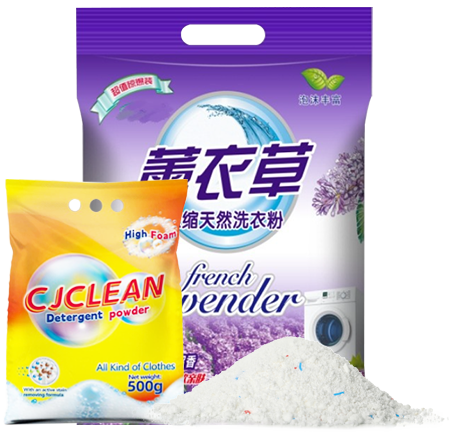
Powder detergents are typically packaged in:
- Kraft paper bags with internal liners
- Recyclable cartons
- Resealable plastic pouches
- Boxed cartons with pour spouts for convenience
Because powder doesn’t spill liquid, it allows lighter and more compact packaging compared to liquids. This often results in a lower carbon footprint during transportation.
Case Study: Reformulating for Performance and Market Acceptance
A mid-size laundry product brand wanted to transition from a legacy powder formula to a modern “eco-focused” soap powder that appeals to younger consumers.
Scenario:
- Original formula relied heavily on sodium sulfate filler and bleach boosters.
- Consumers reported dryness in fabrics and sensitivity issues.
Approach:
- Replaced part of the filler with biodegradable alternatives
- Introduced dual-action enzymes for stain-specific targeting
- Removed optical brighteners suspected to cause fabric dulling
Outcome:
- Customer satisfaction (measured via product reviews) went up by 26%
- Return rate decreased by 18%
- New packaging with recyclable cartons improved brand sentiment
This case highlights how formulation tweaks—backed by packaging and marketing changes—can have measurable business impact.
Detailed Comparison: Liquid vs. Powder vs. Pods
| Attributes | Laundry Soap Powder | Liquid Detergent | Laundry Pods |
|---|---|---|---|
| Cost per load | Lower | Medium | Highest |
| Stain removal (heavy soil) | Very Good | Good | Good |
| Ease of use | Medium (measure & pour) | High | Very High |
| Packaging impact | Lower carbon footprint | Higher | Medium |
| Compatibility with hard water | Excellent | Good | Good |
| Storage stability | Excellent | Good | Fair |
According to consumer testing summaries shared by Consumer Packaging Reports, powder outperforms liquids on cost per wash and heavy soil removal, while liquids and pods score higher on convenience.
How to Identify High-Performance Laundry Soap Powder
Here are criteria to help you choose or develop a product that wins in the marketplace:
Effective Cleaning
Look for multi-enzyme formulations or builder-enhanced powders that tackle protein, oil, and starch-based stains.
Dissolution Speed
Powder must dissolve fully at a range of water temperatures. A powder that leaves residue will frustrate users.
Skin Compatibility
Avoid formulas that leave irritating residues. Consumer safety data from independent sources like the Journal of Dermatological Treatment show that fragrance-free and dye-free powders minimize irritation.
Environmental Claims
Biodegradability and low phosphate content are increasingly important, supported by environmental guidelines like those from the United Nations Environment Programme.
Practical Tips for Consumers
To get the most out of laundry soap powder:
- Measure according to soil level and load size
- Use warm water for heavy soils, cold water for delicate fabrics
- Pre-treat stains with a powder slurry before washing
- Store in dry conditions to prevent clumping
Every tip above is backed by common laundry science principles; mismeasurement and moisture are the top causes of poor performance.
The Role of Packaging in Consumer Perception

Packaging for laundry soap powder must balance functionality and attractiveness. Consider:
- Resealable features to maintain powder freshness
- Clear dosage indicators
- Strong structural design to avoid crushing during transport
Research from the Journal of Consumer Marketing indicates that packaging clarity directly influences perceived product quality.
Final Thoughts
Laundry soap powder remains a powerful and versatile option in the laundry category, offering cost-effective, environmentally aligned, and high-performance cleaning solutions. Understanding formulation, packaging, application, and consumer expectations positions you to build products that truly resonate with the market.
If you want assistance in customizing laundry soap powder packaging or learning how to optimize your products for performance and shelf appeal, you can explore our services at Shenlong Packaging Products Co., Ltd.
FAQ
What makes laundry soap powder different from liquid detergent?
Laundry soap powder typically contains higher levels of builders and surfactants that excel on particulate and ground-in soils. Powders also offer cost advantages and better performance in hard water scenarios.
Can laundry soap powder dissolve in cold water?
Yes, many modern powders are engineered for cold-water dissolution, improving energy efficiency.
Is powder detergent better for heavy stains?
In many cases, yes. Powder detergents often contain components that target particulate and clay-based soils more effectively than liquids.
Are there eco-friendly powder options?
Yes, biodegradable formulations with low phosphate content are widely available and supported by environmental organizations.
How do I store laundry soap powder to maintain quality?
Keep it in a cool, dry place with a resealable top to avoid moisture clumping.