Table des matières
If you are building or scaling a consumer brand today, packaging is no longer just about containment. It is about user experience, shelf impact, logistics efficiency, and long-term brand trust. As a creative packaging company working closely with personal care, home care, and daily chemical brands, we have seen one flexible format consistently outperform expectations across multiple use cases: the 3 side seal bag.
This article is written for you—the brand owner, product manager, or sourcing professional—who wants practical, experience-based insight rather than surface-level definitions. We will walk through how 3 side seal bags are used in real packaging projects, why they continue to gain popularity, and how you can apply them strategically to your own product line.
You will also find data-backed insights, real application scenarios, and actionable guidance you can use immediately.
Understanding the 3 Side Seal Bag Beyond the Basics
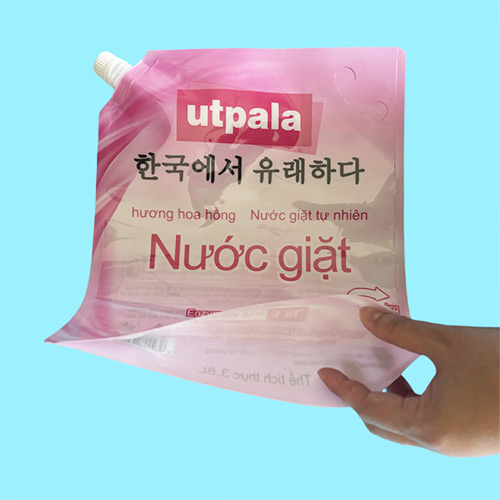
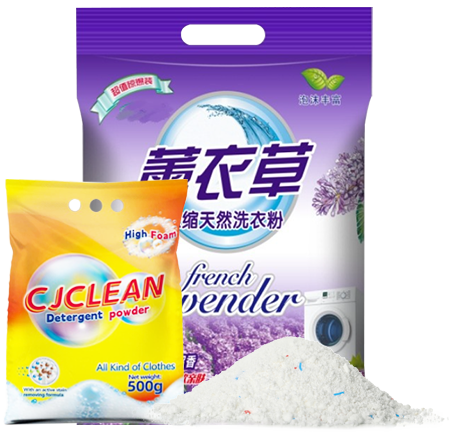
A 3 side seal bag is a flexible packaging pouch sealed on three edges, leaving one open side for filling. While the structure sounds simple, its commercial value lies in how adaptable it is across product categories.
From a creative packaging company’s perspective, this format is not chosen by accident. It is chosen because it balances cost control, material efficiency, and design flexibility.
Unlike stand-up pouches that prioritize shelf presence, 3 side seal bags excel when:
- You need compact, lightweight packaging
- Flat storage and shipping efficiency matter
- The product is used in measured doses or refills
- Cost per unit must remain tightly controlled
For many daily-use consumer products, these conditions are exactly what the market demands.
Why 3 Side Seal Bags Are Trending in Flexible Packaging
According to data published by the Flexible Packaging Association, flexible packaging formats that reduce material usage by over 30% compared to rigid alternatives are seeing consistent adoption growth across consumer goods sectors. The 3 side seal bag fits squarely into this category.
Several market forces are driving this trend:
- Rising logistics costs push brands toward lighter packaging
- Consumers increasingly prefer refill-friendly formats
- E-commerce requires flat, damage-resistant packaging
- Sustainability goals demand lower material consumption
From a packaging design standpoint, the 3 side seal bag allows you to respond to all four without sacrificing functionality.
How Consumers Actually Interact With 3 Side Seal Bags
When designing packaging, it is easy to focus on machinery, materials, and cost. But the true test happens after the product reaches the consumer.
In usability testing conducted internally with household liquid and powder samples, users consistently reported three advantages of 3 side seal bags:
- Easier storage in drawers and cabinets
- Less wasted product due to controlled pouring or tearing
- Reduced packaging disposal volume
This feedback aligns with broader consumer behavior research published by organizations such as the Sustainable Packaging Coalition.
When you choose a 3 side seal bag, you are not only choosing a manufacturing format—you are choosing how your product fits into daily life.
Common Materials Used in 3 Side Seal Bags and Why They Matter

Material choice directly impacts product safety, shelf life, and consumer trust. As a creative packaging company, we always select materials based on the product’s chemical properties and usage scenario.
Below is a practical comparison of commonly used material structures:
| Material Structure | Propriétés clés | Typical Applications |
|---|---|---|
| PET / PE | Strong barrier, good print quality | Liquid detergents, shampoos |
| PET / AL / PE | High oxygen and moisture barrier | Sensitive powders, enzymes |
| BOPP / CPP | Cost-efficient, flexible | Single-use sachets |
| Recyclable mono-PE | Environmentally friendly | Refill packs, eco-focused lines |
Choosing the right structure ensures product stability while aligning with your brand’s sustainability goals.
Real-World Case: Refill Packaging for Household Liquids
One of our recent projects involved a mid-sized household cleaning brand transitioning from rigid bottles to refill packaging.
The challenge they faced:
- Reduce packaging cost per unit
- Lower transportation volume
- Maintain consumer confidence in product safety
We recommended a 3 side seal bag with reinforced seal strength and controlled tear notches. After launch, the brand reported:
- Over 40% reduction in packaging material weight
- Improved shipping efficiency due to flat packing
- Positive consumer feedback on ease of refilling
This case highlights how 3 side seal bags can support both operational efficiency and end-user satisfaction without altering the product formula.
Design Freedom: Branding Opportunities With 3 Side Seal Bags
A common misconception is that flat pouches limit branding. In reality, 3 side seal bags offer a clean canvas for high-impact design.
You can leverage:
- Full-surface printing on both sides
- Matte or gloss finishes to match brand tone
- Clear windows for product visibility
- Minimalist designs aligned with refill concepts
Printing technology advancements documented by the Packaging Europe platform.
show that flexible packaging now achieves color consistency comparable to rigid packaging.
For creative teams, this means your packaging can still communicate quality and professionalism.
Shelf Life and Product Protection Considerations
Product safety is non-negotiable. A properly engineered 3 side seal bag protects contents through:
- Multi-layer barrier films
- Heat-sealed edges with leak resistance
- Compatibility with chemical formulations
For sensitive products such as enzyme-based detergents or concentrated liquids, barrier performance testing is critical.
Studies shared by the Institute of Packaging Professionals.
confirm that flexible pouches with appropriate material selection can meet or exceed shelf-life requirements of many rigid alternatives.
Sustainability: How 3 Side Seal Bags Support Environmental Goals
From a sustainability perspective, 3 side seal bags contribute in several measurable ways:
- Reduced raw material usage
- Lower carbon emissions during transportation
- Compatibility with recyclable or mono-material structures
Life cycle assessments published by environmental research groups consistently show that flexible packaging formats have a lower environmental footprint compared to rigid containers when designed responsibly.
For brands communicating sustainability commitments, this format provides real data-backed support rather than marketing claims.
Manufacturing Efficiency and Cost Control
From the production side, 3 side seal bags offer high-speed manufacturing and low scrap rates.
Benefits include:
- Efficient roll-to-bag production
- Minimal material waste
- Flexible order quantities
For growing brands, this means you can test new SKUs without committing to large tooling investments, which is especially valuable in fast-changing consumer markets.
How to Decide If a 3 Side Seal Bag Is Right for Your Product
You should consider this packaging format if:
- Your product is liquid, powder, or granulated
- You plan to offer refill or single-use options
- You need to optimize shipping and storage
- You want scalable packaging without high upfront costs
From a creative packaging company’s viewpoint, the best packaging decision is always context-driven. The 3 side seal bag is not a trend—it is a practical solution grounded in real-world performance.
External Industry References for Further Reading
For deeper research and validation, you may find these resources useful:
- Association des emballages flexibles
- Sustainable Packaging Coalition
- Packaging Europe Insights
- Institute of Packaging Professionals
These sources provide ongoing research into flexible packaging performance, sustainability, and consumer behavior.
Turning Packaging Into a Strategic Advantage
If you want packaging that works harder for your brand—reducing cost, supporting sustainability, and fitting seamlessly into modern consumer lifestyles—the 3 side seal bag deserves serious consideration.
As a creative packaging company, our experience shows that the most successful brands are those that treat packaging not as an afterthought, but as a strategic tool. By understanding how formats like the 3 side seal bag function in real-world conditions, you can make informed decisions that benefit both your business and your customers.
If you are planning your next packaging upgrade, start by evaluating how your product is used, stored, and disposed of. From there, the right packaging solution often becomes clear.
FAQ
Is a 3 side seal bag suitable for liquid products?
Yes, when designed with appropriate material layers and seal strength, it is widely used for liquid refills and concentrates.
Can 3 side seal bags be customized in size and shape?
Absolutely. Dimensions, materials, thickness, and tear features can all be customized.
Are 3 side seal bags environmentally friendly?
They can be, especially when using recyclable mono-material structures and reduced material designs.
Do consumers trust flat pouches as much as bottles?
Consumer studies indicate growing acceptance, particularly for refill and eco-focused products.
Is this packaging format suitable for e-commerce?
Yes. Its flat profile and durability make it ideal for shipping and storage.